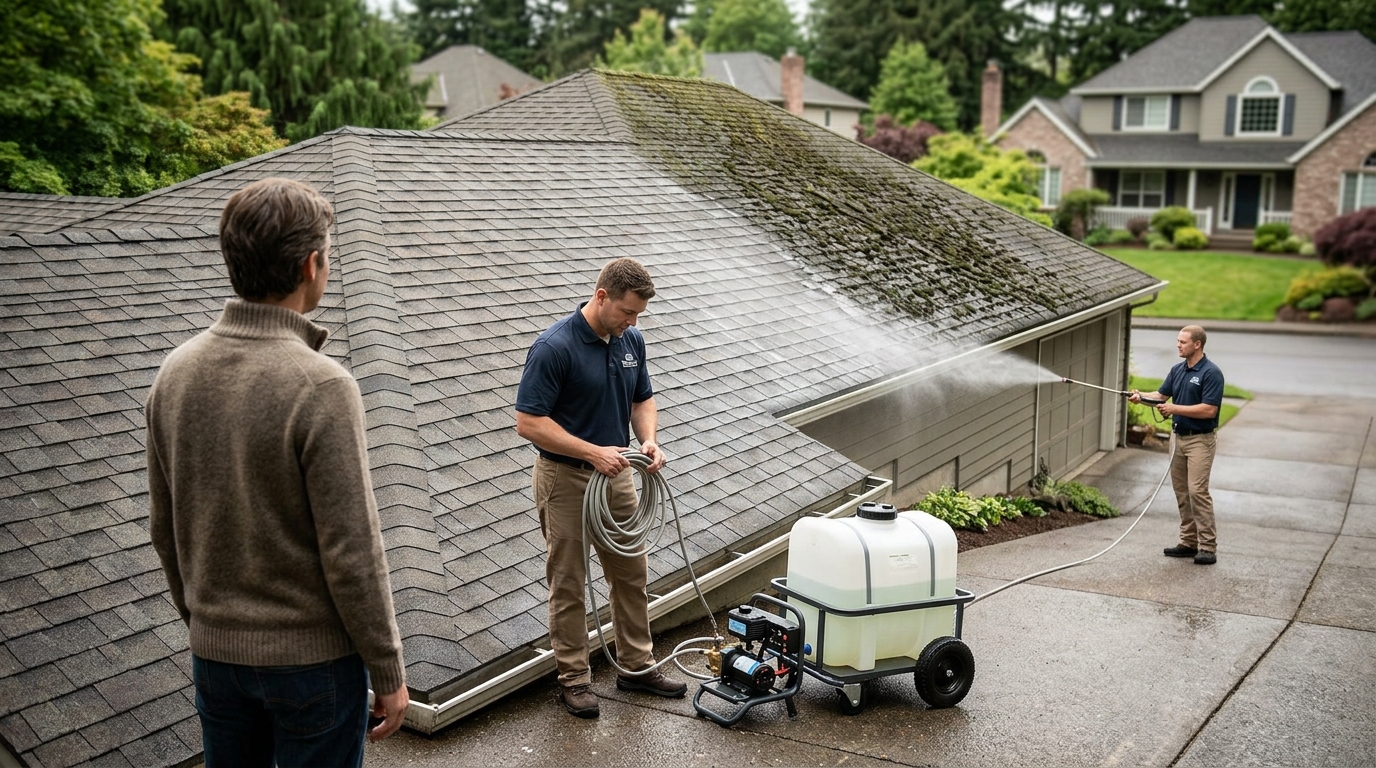
Soft washing is the superior method for delicate roofs because it uses chemical solutions to kill organic growth at low pressure, preventing shingle damage. High-pressure blasting strips granules and voids warranties. This guide covers the mechanics of soft washing, the role of low-pressure rinsing, and how to choose the right approach for your home.
Soft Washing: The Chemical Approach
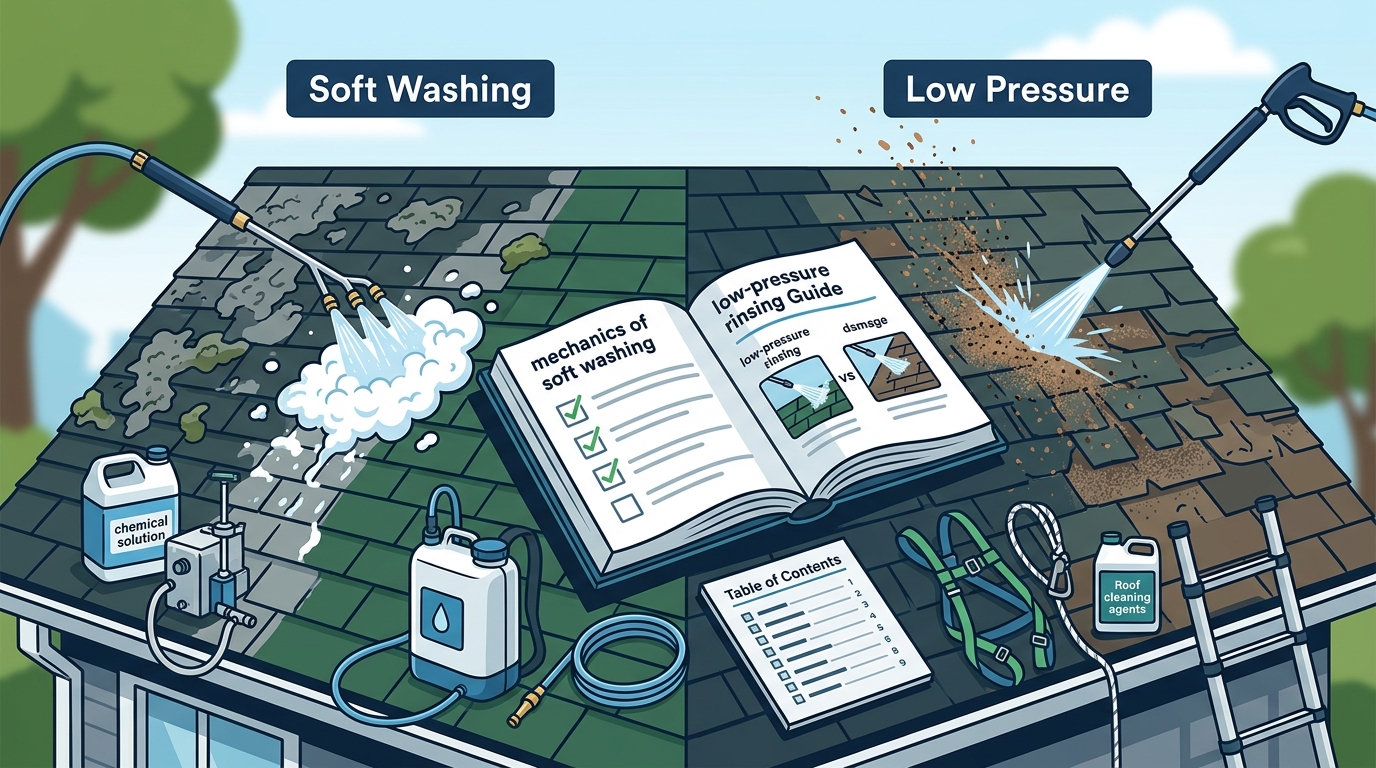
Soft washing is a cleaning technique that relies on specialized biodegradable detergents to break down organic matter rather than brute force. This method is the industry standard for asphalt shingles, tile, and metal roofs. The process involves applying a solution that penetrates the surface to kill moss, algae, and lichen at the root. Once the biological growth is neutralized, a low-pressure rinse removes the residue. This approach preserves the integrity of the roofing material while eliminating the source of the stain.
Why Chemicals Beat Pressure on Shingles
Asphalt shingles are designed to shed water, not withstand high-impact force. High-pressure water can force moisture under the shingles, leading to leaks and rot. Soft washing avoids this risk entirely. The detergents used are calibrated to be safe for the roof surface while being lethal to the organisms causing the discoloration. This makes it the only safe option for extending the lifespan of a delicate roof.
The Role of Gloeocapsa Magma
The dark streaks on many roofs are caused by a bacterium called gloeocapsa magma. This organism thrives in the Pacific Northwest's wet climate. It feeds on the limestone filler in asphalt shingles. Soft washing solutions are specifically formulated to kill this bacterium. By eliminating the food source and the organism itself, the roof remains clean for a longer period. This is a critical distinction from simple rinsing, which only removes surface dirt.
Low Pressure Cleaning: The Mechanical Approach
Low pressure cleaning is a mechanical method that uses water at a reduced PSI to rinse away loose debris and dissolved contaminants. While it is safer than high-pressure washing, it is not a standalone solution for biological growth. It is often used as the final step in a soft washing process. The goal is to remove the dead organic matter and cleaning solution without disturbing the roof surface. This technique is essential for maintaining the aesthetic quality of the roof after the chemical treatment has done its work.
Understanding PSI and GPM
When to Use Low Pressure Alone
Low pressure cleaning alone is suitable for removing loose leaves, pollen, and light dust. It is not effective against moss or algae. If your roof has significant biological growth, low pressure will not remove it. You need the chemical action of soft washing first. However, for routine maintenance between deep cleans, a low-pressure rinse can keep the roof looking fresh. It is a safe, non-invasive way to maintain curb appeal.
Method Comparison Table
| Feature | Soft Washing | Low Pressure Cleaning | High Pressure Washing |
|---|---|---|---|
| Primary Mechanism | Chemical dissolution | Water rinse | Kinetic force |
| PSI Range | 100-300 PSI | 100-500 PSI | 2,000-4,000 PSI |
| Effectiveness on Moss | High (kills at root) | Low (removes surface only) | High (but damages roof) |
| Shingle Safety | Safe | Safe | Dangerous |
| Longevity of Clean | Long (1-3 years) | Short (weeks) | Short (weeks) |
| Warranty Impact | Usually approved | Usually approved | Often voids warranty |
Key Takeaways
- Soft washing is the only method that kills moss and algae at the root, preventing regrowth.
- High-pressure washing strips granules from shingles, leading to premature failure.
- Low pressure cleaning is a safe rinse method but cannot remove biological growth on its own.
- The Pacific Northwest climate accelerates biological growth, making soft washing essential.
- Manufacturer-approved cleaning methods often require soft washing to maintain warranty coverage.
- Biodegradable detergents are safe for landscaping and the environment when used correctly.
- Professional application ensures even coverage and proper dilution of cleaning solutions.
- Regular soft washing extends roof life by preventing moisture intrusion from damaged shingles.
Frequently Asked Questions
Is soft washing safe for all roof types?
Soft washing is generally safe for asphalt shingles, tile, metal, and wood shakes. However, the specific detergent formulation may vary by material. For example, wood shakes require a different solution than asphalt shingles. A professional will assess your roof type and select the appropriate chemicals. This ensures maximum safety and effectiveness.
How long does a soft wash last?
A professional soft wash typically keeps a roof clean for one to three years. The longevity depends on local climate, tree coverage, and humidity levels. In the Portland metro area, the wet climate can promote faster regrowth. Regular maintenance rinses can extend the clean period. This makes soft washing a cost-effective long-term solution.
Can I do soft washing myself?
While DIY kits exist, professional application is recommended. Professionals have the correct equipment to apply solutions evenly and safely. They also know how to protect landscaping and manage runoff. DIY attempts often result in uneven coverage or damage to plants. For a delicate roof, the risk of error is high.
Does soft washing void my roof warranty?
Most roof manufacturers approve soft washing as a maintenance method. High-pressure washing is often explicitly prohibited in warranty terms. Always check your specific warranty documentation. If in doubt, consult your roof manufacturer or a licensed professional. Using approved methods protects your investment.
What is the difference between soft washing and pressure washing?
How often should I have my roof soft washed?
Most roofs benefit from a soft wash every two to three years. If your home is surrounded by trees, you may need more frequent cleaning. Annual low-pressure rinses can help maintain the clean look. A professional can assess your specific situation and recommend a maintenance schedule. This proactive approach prevents major damage.
Conclusion
Choosing the right cleaning method is critical for preserving your roof's integrity. Soft washing is the definitive answer for delicate roofs, offering a safe and effective solution to biological growth. Low pressure cleaning serves as a valuable maintenance tool but cannot replace the chemical action of soft washing. Avoid high-pressure blasting at all costs, as it causes irreversible damage. For expert roof cleaning in the Portland metro area, Elite Pressure Washing PDX provides manufacturer-approved soft washing services. Our team uses commercial-grade equipment and eco-friendly detergents to deliver safe, long-lasting results. Contact us today for a free quote and protect your home's most important asset.