
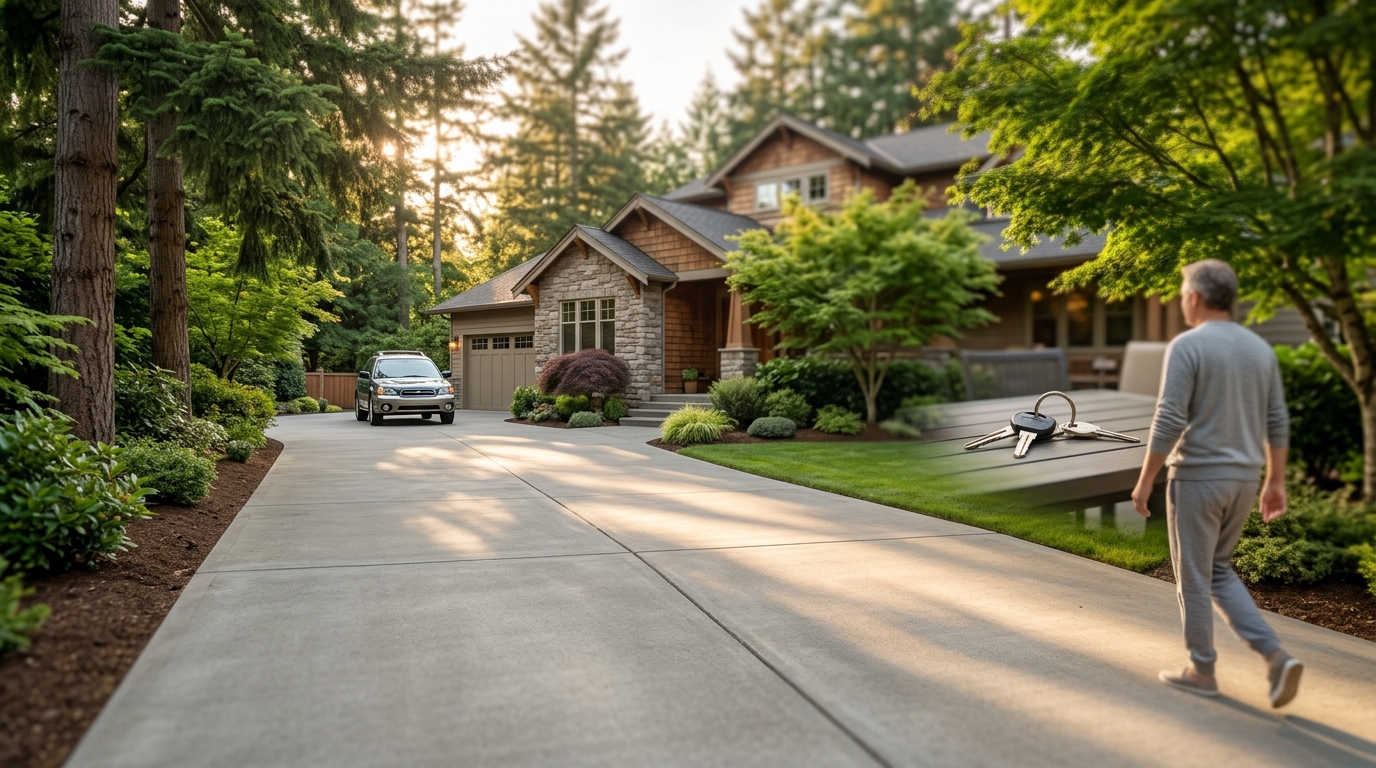
Homeowners in the Portland metro area should schedule a professional driveway cleaning every 12 to 18 months to maintain surface integrity and curb appeal. This guide covers the specific frequency drivers for Pacific Northwest concrete, the optimal seasonal timing for exterior work, and how to protect your investment from local weather patterns.
Driveway Cleaning Frequency
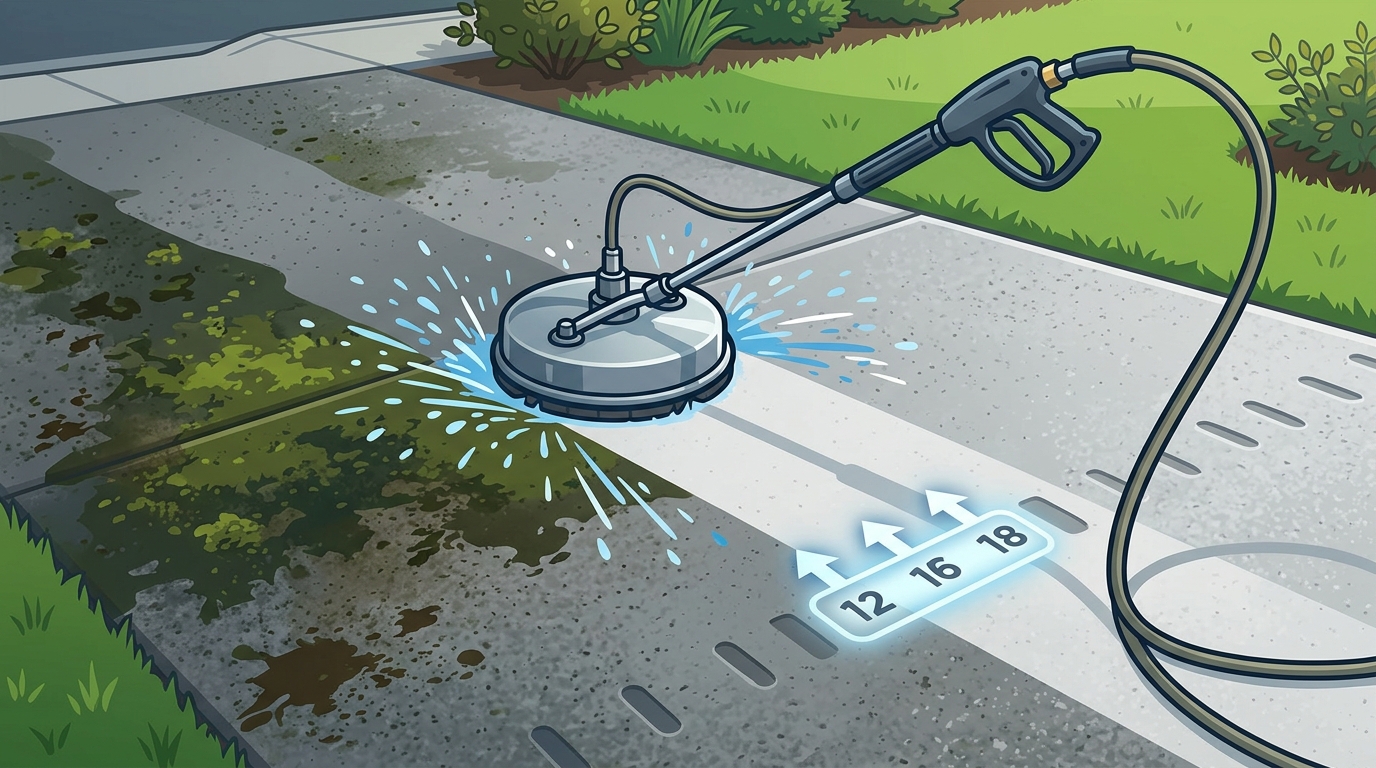
Driveway cleaning frequency is determined by the accumulation of organic matter, chemical stains, and weather exposure. In the Pacific Northwest, the high humidity and consistent rainfall create an ideal environment for moss, algae, and gloeocapsa magma to colonize concrete surfaces. These biological growths are not just cosmetic issues; they secrete acids that etch into the porous structure of the concrete, leading to premature deterioration.
For most residential properties in the Portland metro area, a 12 to 18 month interval is the standard recommendation. However, this baseline shifts based on specific environmental factors. Properties located under heavy tree canopies, such as those in established neighborhoods in Beaverton or Hillsboro, often require cleaning every 12 months due to accelerated organic buildup. Conversely, driveways in open, sun-exposed areas may tolerate a 24-month cycle if no chemical stains are present.
Impact of Tree Canopy and Shade
Shaded driveways are the primary drivers for increased cleaning frequency. When a driveway sits beneath mature trees, it is subject to a constant rain of leaves, sap, and organic debris. This debris retains moisture against the concrete, preventing the surface from drying out. The persistent dampness allows moss and algae to establish deep root systems. Homeowners in areas like Lake Oswego or West Linn, where mature landscaping is common, should monitor their driveways quarterly. If you see significant darkening or a slippery texture, it is time to schedule a professional clean, regardless of the last service date.
Chemical Stains and Oil Spots
Seasonal Timing for Exterior Cleaning
Seasonal timing is critical for ensuring that cleaning solutions work effectively and that the surface has adequate time to dry. In the Pacific Northwest, the weather patterns dictate a specific window for optimal exterior maintenance. The goal is to clean when the ambient temperature is above 50 degrees Fahrenheit and when there is a forecast of dry weather for at least 48 hours following the service.
Spring: The Primary Cleaning Window
Spring, specifically late April through May, is the ideal time for a comprehensive driveway clean. By this time, the winter rains have subsided, and the temperatures are warm enough for cleaning chemicals to activate. Cleaning in spring removes the accumulated grime, moss, and salt residue from the winter months. It also prepares the surface for the summer season, ensuring that the concrete is ready for any staining or sealing projects. Homeowners who schedule their clean in spring often notice a significant boost in curb appeal before the warmer months begin.
Fall: Pre-Winter Preparation
Fall, from September to early November, serves as the second major window for driveway maintenance. Cleaning in the fall is essential for removing the summer buildup of pollen, dirt, and organic matter. More importantly, it prepares the driveway for the wet winter season. A clean, dry surface is less likely to develop ice patches or slippery moss colonies during the cold months. If you missed the spring window, fall is the best alternative. It allows the concrete to dry out before the first heavy rains arrive, preventing water from trapping dirt and debris in the pores of the concrete.
Winter and Summer Considerations
Winter is generally not recommended for pressure washing unless there is a specific stain removal need. The cold temperatures can cause water to freeze on the surface, creating safety hazards and potentially damaging the concrete. Summer can be a viable option, but the intense heat can cause cleaning solutions to dry too quickly, reducing their effectiveness. If you must clean in the summer, it is best to schedule the service for early morning or late afternoon when temperatures are cooler. Elite Pressure Washing PDX advises against winter cleaning for routine maintenance, focusing instead on the spring and fall windows for the best results.
Surface Type Comparison
Different driveway materials require different cleaning frequencies and techniques. Understanding the specific needs of your surface type helps you plan your maintenance schedule more effectively. The table below outlines the recommended cleaning intervals for common driveway materials in the Portland area.
| Surface Type | Recommended Frequency | Primary Concerns | Technique |
|---|---|---|---|
| Concrete | 12-18 months | Moss, algae, oil stains | Hot water pressure washing |
| Asphalt | 18-24 months | Cracking, oxidation | Low-pressure washing |
| Brick Pavers | 12 months | Moss in joints, shifting | Medium pressure, joint cleaning |
| Stamped Concrete | 12-18 months | Sealant degradation, staining | Soft wash, sealant refresh |
Concrete is the most common driveway material in the Portland metro area. It is durable but porous, making it susceptible to staining and biological growth. Asphalt driveways are more flexible but can crack over time. Low-pressure washing is essential for asphalt to avoid dislodging the aggregate. Brick pavers require more frequent attention because moss can grow in the joints, causing the pavers to shift. Stamped concrete, which is often used for decorative driveways, requires a gentler approach to preserve the texture and color.
Key Takeaways
- Schedule a professional driveway cleaning every 12 to 18 months for optimal maintenance.
- Shaded driveways under tree canopies may require cleaning every 12 months due to accelerated moss growth.
- Spring (April-May) and Fall (September-November) are the best seasons for exterior cleaning in the Pacific Northwest.
- Address oil and chemical stains within 48 hours to prevent permanent damage to the concrete.
- Winter cleaning is generally not recommended due to freezing temperatures and safety hazards.
- Use hot-water pressure washing for concrete to effectively remove deep-set organic stains.
- Regular cleaning extends the life of your driveway and protects your home's curb appeal.
- Consult with a local professional to determine the best frequency for your specific property conditions.
Frequently Asked Questions
How often should I pressure wash my driveway in Portland?
Most homeowners in the Portland metro area should pressure wash their driveways every 12 to 18 months. If your driveway is shaded by trees, you may need to clean it every 12 months to prevent moss and algae buildup.
What is the best time of year to clean a driveway?
The best times are late spring (April-May) and early fall (September-November). These periods offer warm temperatures and dry weather, which are ideal for cleaning and drying the surface.
Can I clean my driveway in the winter?
It is generally not recommended to pressure wash a driveway in the winter. Cold temperatures can cause water to freeze, creating safety hazards and potentially damaging the concrete. Only clean in winter if you have a specific stain that requires immediate attention.
How do I remove oil stains from my driveway?
Oil stains should be addressed within 24 to 48 hours. Use a specialized degreaser and hot-water pressure washing to lift the stain. If the stain is old and set, it may require multiple treatments or a professional service.
Does pressure washing damage concrete?
When done correctly, pressure washing does not damage concrete. However, using too high a pressure can etch the surface. Professional technicians use the appropriate pressure settings for each surface type to ensure safe and effective cleaning.
How much does driveway cleaning cost in Portland?
The cost of driveway cleaning varies based on the size of the driveway, the level of staining, and the type of surface. For an accurate quote, contact a local professional for a free on-site assessment.
Should I seal my driveway after cleaning?
Sealing your driveway after cleaning is a good idea, especially for concrete. A sealant protects the surface from stains, UV rays, and moisture. It is best to apply a sealant within 24 to 48 hours after the driveway has been cleaned and dried.
Conclusion
Maintaining your driveway is a simple but essential part of home care in the Pacific Northwest. By understanding the factors that influence cleaning frequency and choosing the right seasonal timing, you can protect your investment and enhance your property's appearance. For homeowners in the Portland metro area, scheduling a professional clean every 12 to 18 months is the most effective strategy. Elite Pressure Washing PDX offers expert driveway and concrete cleaning services, ensuring that your surface is restored to its best condition with safe, high-quality techniques. Contact us today to schedule your next cleaning and keep your driveway looking its best year-round.