Soft Washing vs. High-Pressure: The Ultimate Guide to Delicate Roof Care
Soft washing is the superior method for delicate roofs because it uses low pressure and chemical agents to eliminate biological growth without damaging shingles. This guide covers the mechanics of soft washing, the risks of high-pressure blasting, and how to protect specific roof materials. We will explore why chemical application beats brute force for long-term roof health.
Soft Washing Mechanics
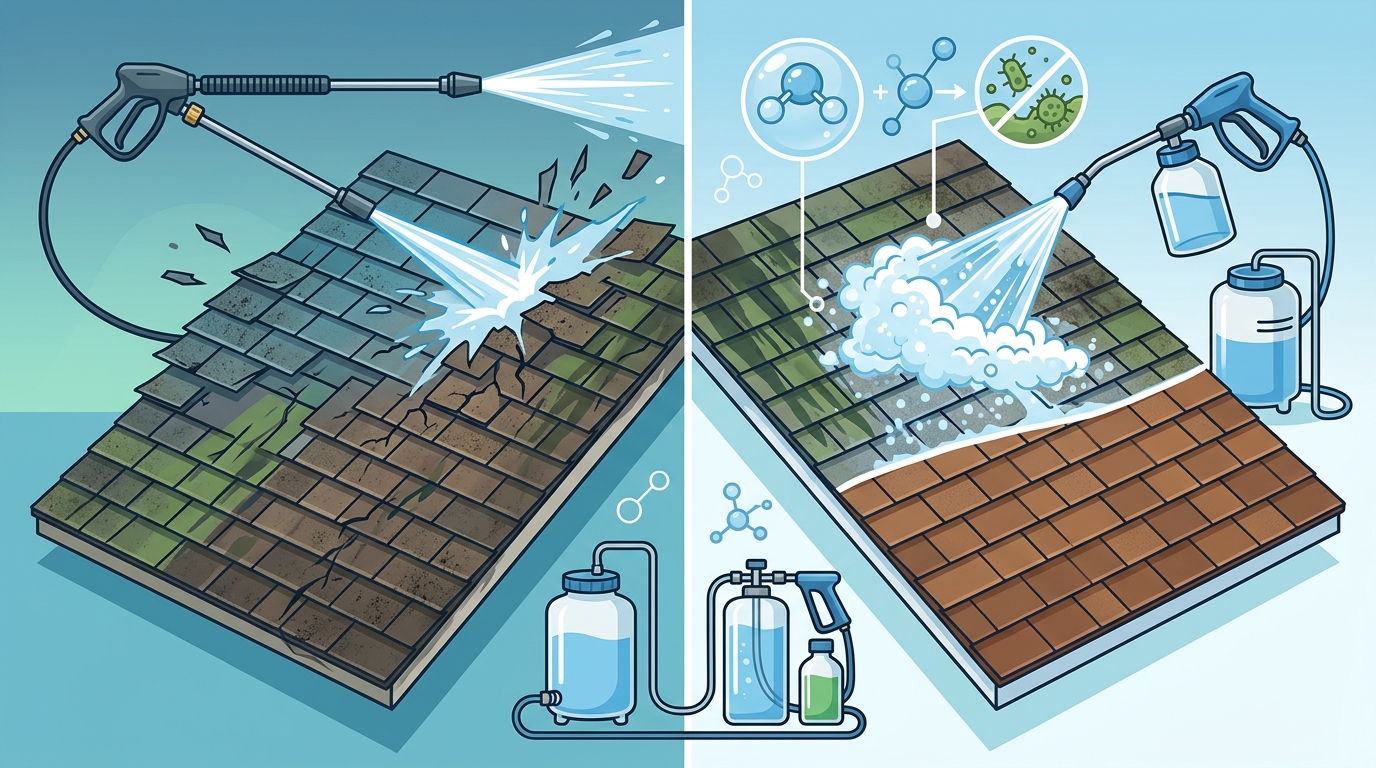
Soft washing is a cleaning technique that relies on chemical application and low-pressure rinsing to remove organic growth from surfaces. Unlike traditional pressure washing, which uses high PSI to blast away dirt, soft washing targets the root of the problem. This method is essential for roofs because asphalt shingles and other delicate materials cannot withstand the force of a high-pressure stream.
The Role of Chemical Agents
Soft washing utilizes specific detergents, often containing sodium hypochlorite or quaternary ammonium compounds, to kill algae, moss, and lichen. These biological organisms are the primary cause of roof discoloration and accelerated aging. The chemical solution penetrates the surface, killing the growth at the cellular level. Once the organisms are dead, a low-pressure rinse removes the residue without stressing the material.
Why Pressure is the Enemy
High-pressure washing can easily strip the protective granules from asphalt shingles. These granules provide UV protection and waterproofing. When they are removed, the underlying asphalt is exposed, leading to rapid deterioration. Soft washing avoids this risk entirely by keeping the water pressure below 500 PSI. This gentle approach ensures the roof structure remains intact while achieving a clean finish.
Low Pressure Cleaning
Low pressure cleaning is a broader category that includes soft washing but also encompasses other gentle cleaning techniques. It is defined by the use of water pressure that is insufficient to damage the substrate. For roof care, this means using a pressure washer set to a very low setting or a dedicated soft wash system. The goal is to move water and cleaning agents across the surface without creating impact force.
Equipment and Technique
Professional roof cleaning requires specialized equipment. A standard pressure washer is often too powerful for roofs, even at its lowest setting. Soft wash systems use a pump that generates low pressure and a wide spray pattern. This allows for even coverage and reduces the risk of water intrusion under shingles. The technique involves applying the solution, allowing it to dwell, and then rinsing gently.
Benefits for Roof Longevity
Using low pressure cleaning extends the life of your roof by preventing physical damage. It also helps maintain the warranty on many roofing materials. Manufacturers often void warranties if high-pressure washing is used. By choosing a low pressure method, you protect your investment and ensure the roof continues to perform as intended. This approach is particularly important in the Pacific Northwest, where moisture and shade encourage biological growth.
Roof Material Protection
Roof material protection is the primary goal of any cleaning strategy. Different roofing materials have different tolerances for water pressure and chemical exposure. Understanding these differences is crucial for selecting the right cleaning method. Asphalt shingles, metal roofs, and tile roofs all require specific care to avoid damage.
Asphalt Shingles
Asphalt shingles are the most common roofing material in the Portland metro area. They are susceptible to granule loss from high pressure. Soft washing is the only recommended method for these roofs. The chemical solution removes the dark streaks caused by Gloeocapsa magma, a type of algae that thrives in damp climates. This restores the roof's appearance and prevents the algae from accelerating shingle decay.
Metal and Tile Roofs
Metal roofs can handle slightly more pressure than asphalt, but soft washing is still preferred. It prevents scratches and dents that can lead to rust. Tile roofs, such as clay or concrete, are heavy and brittle. High pressure can crack tiles, leading to leaks. Soft washing is safe for all these materials because it relies on chemistry rather than force. This makes it the universal choice for professional roof cleaning.
Method Comparison
The following table compares soft washing and high-pressure washing for roof applications. This reference helps homeowners understand why one method is superior for delicate surfaces.
| Feature | Soft Washing | High-Pressure Washing |
|---|---|---|
| Pressure Level | Below 500 PSI | 1,500 to 4,000 PSI |
| Primary Mechanism | Chemical application | Physical impact |
| Shingle Safety | Safe | Damaging |
| Biological Removal | Kills at the root | Blasts surface only |
| Warranty Impact | Usually approved | Often voids warranty |
| Longevity Impact | Extends roof life | Shortens roof life |
Key Takeaways
- Soft washing is the only safe method for asphalt shingle roofs.
- High-pressure washing strips protective granules from shingles.
- Chemical agents in soft washing kill algae and moss at the root.
- Low pressure cleaning prevents water intrusion under shingles.
- Soft washing is approved by most roofing manufacturers.
- Metal and tile roofs also benefit from soft washing to prevent physical damage.
- Professional application ensures even coverage and safe rinsing.
- Regular soft washing extends the overall lifespan of your roof.
Frequently Asked Questions
Is soft washing safe for all roof types?
Yes, soft washing is safe for asphalt, metal, tile, and wood shake roofs. The low pressure and controlled chemical application prevent physical damage to the material.
What is the difference between soft washing and pressure washing?
Soft washing uses low pressure and chemicals to clean, while pressure washing uses high pressure to blast away dirt. Soft washing is safer for delicate surfaces like roofs.
Can I soft wash my roof myself?
It is possible, but professional application is recommended. Professionals have the correct equipment and knowledge to apply chemicals safely and rinse thoroughly.
How often should I soft wash my roof?
Frequency depends on your local climate and shade. In the Pacific Northwest, every 3 to 5 years is typical. Regular inspections can help determine the best schedule.
Does soft washing void my roof warranty?
Most manufacturers approve soft washing. High-pressure washing is often prohibited. Always check your specific warranty terms before cleaning.
What causes the black streaks on my roof?
Black streaks are caused by Gloeocapsa magma, a type of algae. It thrives in damp, shaded areas and feeds on limestone in the shingles.
Conclusion
Choosing the right cleaning method is critical for preserving your roof's integrity. Soft washing is the definitive answer for delicate roofs, offering a safe and effective alternative to high-pressure blasting. By understanding the mechanics of chemical cleaning and the vulnerabilities of roofing materials, you can make informed decisions about your home's maintenance. Elite Pressure Washing PDX specializes in manufacturer-approved roof cleaning methods that protect your investment. We serve the Portland metro and SW Washington with fully insured technicians and commercial-grade equipment. Contact us today for a free quote and ensure your roof remains protected for years to come.