
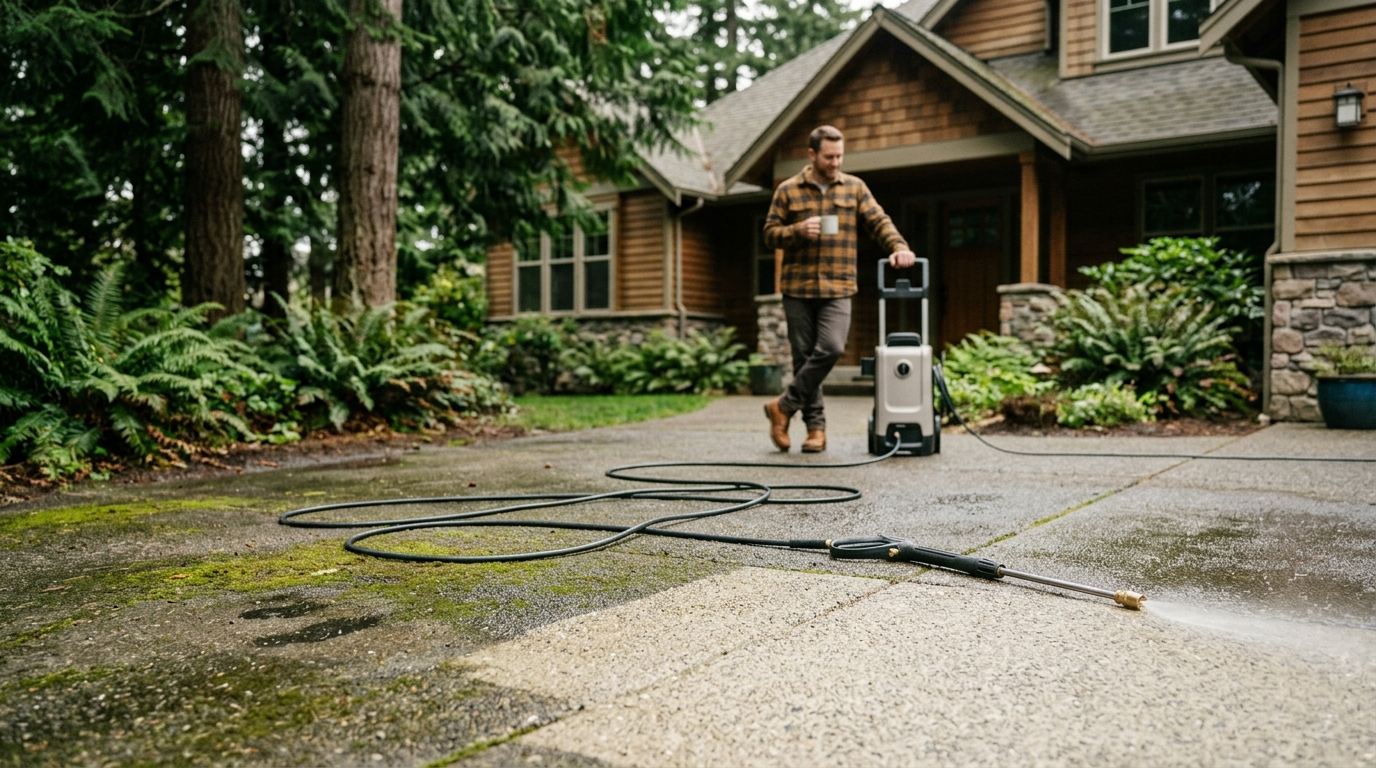
For most Portland and Vancouver homeowners, the optimal driveway cleaning schedule is once every 12 to 18 months. This frequency effectively removes the moss, algae, and oil stains that accumulate in the region's persistent damp climate. Maintaining this rhythm protects your concrete investment and preserves curb appeal without unnecessary expense.
The Impact of Pacific Northwest Moisture
The Pacific Northwest is defined by its wet weather, which directly accelerates surface degradation. Driveway cleaning is the primary defense against the biological growth that thrives in this environment. The region's climate creates a perfect incubator for organic matter on hard surfaces. according to Pacific Northwest National
According to the US EPA, the Northwest is best known for its vast Pacific coastline and rainy weather. This constant moisture allows moss and algae to establish deep roots in concrete pores. If left unchecked, these organisms can lift concrete spalling and create slippery, hazardous walking surfaces.
Homeowners in areas like Beaverton and Hillsboro often notice a green tint on their driveways within six months of the last wash. This is not just a cosmetic issue; it is a sign of active biological colonization that requires professional intervention to reverse safely.
Understanding Moss and Algae Growth
Moss and algae are fungi and microorganisms that grow in various shapes and colors, often appearing fuzzy or slimy on damp surfaces. In the Pacific Northwest, these organisms are not merely dirt; they are living entities that feed on the minerals in your concrete. Understanding their lifecycle is key to setting the right cleaning interval.
Research from Oregon State University highlights that mold and mildew are natural but can become problematic in high-humidity environments. For driveways, this means that standard sweeping is insufficient. You need a cleaning method that penetrates the surface to kill the root system of the moss.
When you see black streaks or green patches, the growth is already established. A professional service using commercial-grade equipment can strip this buildup in a single visit, resetting the clock on your maintenance schedule.
Managing Oil and Tire Marks
Beyond biological growth, mechanical wear creates its own cleaning challenges. Oil stains are a persistent issue for driveways in the Portland metro area. Unlike dirt, oil bonds chemically with concrete, making it difficult to remove with water alone. The frequency of your cleaning schedule should account for how often you park vehicles on the surface.
For a typical two-car household, tire marks and minor oil drips accumulate steadily. If you notice darkening near your garage entrance, it is time to schedule a deep clean. Waiting too long allows oil to penetrate the concrete's pores, leading to permanent discoloration that no amount of pressure washing can fix.
Elite Pressure Washing PDX uses hot-water pressure washers and specialized detergents to lift these stubborn marks. This approach ensures that your driveway looks uniform and bright, rather than patchy and neglected.
Seasonal Timing for Maximum Effect
Timing your cleaning to the right season can significantly improve results. Spring cleaning is often the most effective time to address the winter buildup. After months of rain and leaf drop, your driveway is likely covered in a layer of organic debris. Cleaning in spring removes this layer before the warmer months encourage faster algae growth.
However, fall is also a critical window. As the weather turns damp again, a fall clean prepares your driveway for the winter. It removes the summer's pollen and dirt, ensuring that the winter rain does not wash debris into the concrete's cracks. This proactive approach extends the life of your surface.
For homeowners in Vancouver, WA, the same principles apply. The climate across the Columbia River is similar, meaning the same 12 to 18 month schedule works well. Consistency is more important than the specific month, as long as you are addressing the buildup before it becomes entrenched.
The Professional Advantage
DIY pressure washing can be risky if you do not have the right equipment. Professional cleaning offers a level of precision that rental machines often lack. Commercial-grade surface cleaners provide an even, streak-free finish that is difficult to achieve with a standard wand. This consistency is crucial for maintaining the aesthetic value of your property.
Furthermore, professionals are trained to adjust pressure based on the age and condition of your concrete. Using too much pressure on older driveways can cause etching and damage. A trained technician knows how to balance cleaning power with surface safety. This expertise ensures that your driveway is restored without being compromised.
By choosing a local, insured provider, you also gain peace of mind. You know that the work is backed by a guarantee and that the company is accountable for the results. This reliability is a key factor in deciding how often to book a service.
Key Takeaways
- The ideal cleaning frequency for Pacific Northwest driveways is every 12 to 18 months.
- High humidity and rain accelerate moss and algae growth, requiring regular professional intervention.
- Oil stains bond with concrete and must be addressed before they become permanent.
- Spring and fall are the optimal seasons for scheduling a deep clean.
- Professional equipment provides a safer and more even finish than DIY rental units.
- Consistent cleaning protects your investment and maintains curb appeal.
Frequently Asked Questions
How often should I pressure wash my driveway in Portland?
Most homeowners in the Portland metro area should schedule a professional pressure wash every 12 to 18 months. This interval accounts for the region's high rainfall and the rapid growth of moss and algae on concrete surfaces.
Does moss damage concrete driveways?
Yes, moss can damage concrete over time. Its root system penetrates the pores of the concrete, and the moisture it retains can lead to spalling and surface degradation, especially during freeze-thaw cycles.
Can I use a rental pressure washer for my driveway?
You can, but it requires caution. Rental units often lack the surface cleaners and pressure control needed for a safe, even finish. Improper use can etch or damage the concrete, making professional service a safer option for long-term maintenance.
What is the best time of year to clean a driveway?
Spring and fall are the best times. Spring cleaning removes winter buildup, while fall cleaning prepares the surface for the wet winter months. Both seasons offer ideal weather conditions for drying and inspection.
How do I remove oil stains from my driveway?
Oil stains require specialized detergents and often hot water to break down the chemical bond with the concrete. Professional services use these specific agents to lift the stain, whereas water alone is usually ineffective.
Conclusion
Maintaining your driveway in the Pacific Northwest requires a proactive approach to cleaning. By adhering to a 12 to 18 month schedule, you protect your concrete from the damaging effects of moss, algae, and oil. This routine not only preserves the structural integrity of your surface but also enhances the overall appearance of your property. For reliable, professional results, contact Elite Pressure Washing PDX to schedule your next cleaning.